

Posts with tag 'Homes for sale in Jackson Township'
Subscribe and receive email notifications of new blog posts.
 RSS Feed
20
The Home Buyer's Guide to Getting Mortgage Ready

Don't wait until you're ready to move to start preparing financially to buy a home.
If you're like the vast majority of home buyers, you will choose to finance your purchase with a mortgage loan. By preparing in advance, you can avoid the common delays and roadblocks many buyers face when applying for a mortgage.
The requirements to secure a mortgage may seem overwhelming, especially if you're a first-time buyer. But we've outlined three simple steps to get you started on your path to homeownership.
Even if you're a current homeowner, it's a good idea to prepare in advance so you don't encounter any surprises along the way. Lending requirements have become more rigorous in recent years, and changes to your credit history, debt levels, job type and other factors could impact your chances of approval.
It's never too early to start preparing to buy a home. Follow these three steps to begin laying the foundation for your future home purchase today!
STEP 1: CHECK YOUR CREDIT SCORE
Your credit score is one of the first things a lender will check to see if you qualify for a loan. It's a good idea to review your credit report and score yourself before you're ready to apply for a mortgage. If you have a low score, you will need time to raise it. And sometimes fraudulent activity or erroneous information will appear on your report, which can take months to correct.
The credit score most lenders use is your FICO score, a weighted score developed by the Fair Isaac Corporation that takes into account your payment history (35%), amounts owed (30%), length of credit history (15%), new credit (10%), and credit mix (10%).1
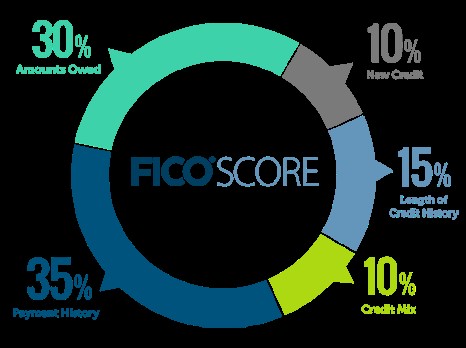
Source: myFico.com
Base FICO scores range from 300 to 850. A higher FICO score will help you qualify for a lower mortgage interest rate, which will save you money.2
By federal law, you are entitled to one free copy of your credit report every 12 months from each of the three major credit bureaus (Equifax, Experian and Transunion). Request your free credit report at https://www.annualcreditreport.com.
Minimum Score Requirements
To qualify for the lowest interest rates available, you will usually need a FICO score of 760 or higher. Most lenders require a score of at least 620 to qualify for a conventional mortgage.3
If your FICO score is less than 620, you may be able to qualify for a non-conventional mortgage. However, you should expect to pay higher interest rates and fees. For example, you may be able to secure an FHA loan (one issued by a private lender but insured by the Federal Housing Administration) with a credit score as low as 580 if you can make a 3.5 percent down payment. And FHA loans are available to applicants with credit scores as low as 500 with a 10 percent down payment.4
Increase Your Credit Score
There's no quick fix for a low credit score, but the following steps will help you increase it over time.5
- Make Payments on Time
At 35 percent, your payment history accounts for the largest portion of your credit score. Therefore, it's crucial to get caught up on any late payments and make all of your future payments on time.
If you have trouble remembering to pay your bills on time, set up payment reminders through your online banking platform, a free money management tool like Mint, or an app like BillMinder.
- Avoid Applying for New Credit You Don't Need
New accounts will lower your average account age, which could negatively impact your length of credit history. Also, each time you apply for credit, it can result in a small decrease in your credit score.
The exception to this rule? If you don't have any credit cards—or any credit accounts at all—you should open an account to establish a credit history. Just be sure to use it responsibly and pay it off in full each month.
If you need to shop for a new credit account, for example, a car loan, be sure to complete your loan applications within a short period of time. FICO attempts to distinguish between a search for a single loan and applications to open several new lines of credit by the window of time during which inquiries occur.
- Pay Down Credit Cards
When you pay off your credit cards and other revolving credit, you lower your amounts owed, or credit utilization ratio (ratio of account balances to credit limits). Some experts recommend starting with your highest-interest debt and paying it off first. Others suggest paying off your lowest balance first and then rolling that payment into your next-lowest balance to create momentum.
Whichever method you choose, the first step is to make a list of all of your credit card balances and then start tackling them one by one. Make the minimum payments on all of your cards except one. Pay as much as possible on that card until it's paid in full, then cross it off your list and move on to the next card.
|
Debt |
Interest Rate |
Total Payoff |
Minimum Payment |
|
Credit Card 1 |
12.5% |
$460 |
$18.40 |
|
Credit Card 2 |
18.9% |
$1,012 |
$40.48 |
|
Credit Card 3 |
3.11% |
$6,300 |
$252 |
- Avoid Closing Old Accounts
Closing an old account will not remove it from your credit report. In fact, it can hurt your score, as it can raise your credit utilization ratio—since you'll have less available credit—and decrease your average length of credit history.
Similarly, paying off a collection account will not remove it from your report. It remains on your credit report for seven years, however, the negative impact on your score will decrease over time.
- Correct Errors on Your Report
Mistakes or fraudulent activity can negatively impact your credit score. That's why it's a good idea to check your credit report at least once per year. The Federal Trade Commission has instructions on their website for disputing errors on your report.
While it may seem like a lot of effort to raise your credit score, your hard work will pay off in the long run. Not only will it help you qualify for a mortgage, a high credit score can help you secure a lower interest rate on car loans and credit cards, as well. You may even qualify for lower rates on insurance premiums.6
STEP 2: SAVE UP FOR A DOWN PAYMENT AND CLOSING COSTS
The next step in preparing for your home purchase is to save up for a down payment and closing costs.
Down Payment
When you purchase a home, you typically pay for a portion of it in cash (down payment) and take out a loan to cover the remaining balance (mortgage).
Many first-time buyers wonder: How much do I need to save for a down payment? The answer is … it depends.
Generally speaking, the higher your down payment, the more money you will save on interest and fees. For example, you will qualify for a lower interest rate and avoid paying for mortgage insurance if your down payment is at least 20 percent of the property's purchase price. But what if you can't afford to put down 20 percent?
On a conventional loan, you will be required to purchase private mortgage insurance (PMI) if your down payment is less than 20 percent. PMI is insurance that compensates your lender if you default on your loan.7
PMI will cost you between 0.3 to 1.5 percent of the overall mortgage amount each year.8 So, on a $100,000 loan, you can expect to pay between $300 and $1500 per year for PMI until your mortgage balance falls below 80 percent of the appraised value.9 For a conventional mortgage with PMI, most lenders will accept a minimum down payment of five percent of the purchase price.7
If a five-percent down payment is still too high, an FHA-insured loan may be an option for you. Because they are guaranteed by the Federal Housing Administration, FHA loans only require a 3.5 percent down payment if your credit score is 580 or higher.7
The downside of getting an FHA loan? You'll be required to pay an upfront mortgage insurance premium (MIP) of 1.75 percent of the total loan amount, as well as an annual MIP of between 0.80 and 1.05 percent of your loan balance on a 30-year note. There are also certain limitations on the types of loans and properties that qualify.10
There are a variety of other government-sponsored programs created to assist home buyers, as well. For example, veterans and current members of the Armed Forces may qualify for a VA-backed loan requiring a $0 down payment.7 Consult a mortgage lender about what options are available to you.
|
TYPE |
MINIMUM DOWN |
ADDITIONAL FEES |
|
Conventional Loan |
20% |
Qualify for the best rates and no mortgage insurance required |
|
Conventional Loan |
5% |
Must purchase private mortgage insurance costing 0.3 - 1.5% of mortgage annually |
|
FHA Loan |
3.5% |
Upfront mortgage insurance premium of 1.75% of loan amount and annual fee of 0.8 - 1.05% |
Current Homeowners
If you're a current homeowner, you may have equity in your home that you can use toward your down payment on a new home. We can help you estimate your expected return after you sell your current home and pay back your existing mortgage. Contact us for a free evaluation!
Closing Costs
Closing costs should also be factored into your savings plan. These may include loan origination fees, discount points, appraisal fees, title searches, title insurance, surveys and other fees associated with the purchase of your home. Closing costs vary but typically range between two to five percent of the purchase price.11
If you don't have the funds to pay these outright at closing, you can often add them to your mortgage balance and pay them over time. However, this means you'll have a higher monthly payment and pay more over the long term because you'll pay interest on the fees.
STEP 3: ESTIMATE YOUR HOME PURCHASING POWER
Once you have the required credit score, savings for a down payment and a list of all your outstanding debt obligations via your credit report, you can assess whether you are ready and able to purchase a home.
It's important to have a sense of how much you can reasonably afford—and how much you'll be able to borrow—to see if homeownership is within reach.
Your debt-to-income (DTI) ratio is one of the main factors mortgage companies use to determine how much they are willing to lend you, and it can help you gauge whether or not your home purchasing goals are realistic given your current financial situation.
Your DTI ratio is essentially a comparison of your housing expenses and other debt versus your income. There are two different DTI ratios that lenders consider:
Front-End Ratio
Also called the housing ratio, this is the percentage of your income that would go toward housing expenses each month, including your mortgage payment, private mortgage insurance, property taxes, homeowner's insurance and association dues.12
To calculate your front-end DTI ratio, a lender will add up your expected housing expenses and divide it by your gross monthly income (income before taxes). The maximum front-end DTI ratio for most mortgages is 28 percent. For an FHA-backed loan, this ratio must not exceed 31 percent.13
Back-End Ratio
The back-end ratio takes into account all of your monthly debt obligations: your expected housing expenses PLUS credit card bills, car payments, child support or alimony, student loans and any other debt that shows up on your credit report.12
To calculate your back-end ratio, a lender will tabulate your expected housing expenses and other monthly debt payments and divide it by your gross monthly income (income before taxes). The maximum back-end DTI ratio for most mortgages is 36 percent. For an FHA-backed loan, this ratio must not exceed 41 percent.13
Home Affordability Calculator
To get a sense of how much home you can afford, visit the National Association of Realtors' free Home Affordability Calculator at https://www.realtor.com/mortgage/tools/affordability-calculator.
This handy tool will help you determine your home purchasing power depending on your location, annual income, monthly debt and down payment. It also offers a monthly mortgage breakdown that projects what you would pay each month in principal and interest, property taxes, and home insurance.
The Home Affordability Calculator defaults to a back-end DTI ratio of 36 percent. If the monthly cost estimate at that ratio is significantly higher than what you're currently paying for housing, you need to consider whether or not you can make up the difference each month in your budget.
If not, you may want to lower your target purchase price to a more conservative DTI ratio. The tool enables you to scroll through higher and lower price points to see the impact on your monthly payments so you can identify your ideal price point.
(Note: This tool only provides an estimate of your purchasing power. You will need to secure pre-approval from a mortgage lender to know your true mortgage approval amount and monthly payment projections.)
Can I Afford to Buy My Dream Home?
Once you have a sense of your purchasing power, it's time to find out which neighborhoods and types of homes you can afford. The best way to determine this is to contact a licensed real estate agent. We help homeowners like you every day and can send you a comprehensive list of homes within your budget that meet your specific needs.
If there are homes within your price range and target neighborhoods that meet your criteria—congratulations! It's time to begin your home search.
If not, you may need to continue saving up for a larger down payment … or adjust your search parameters to find homes that do fit within your budget. We can help you determine the right course for you.
START LAYING YOUR FOUNDATION TODAY
It's never too early to start preparing financially for a home purchase. These three steps will set you on the path toward homeownership … and a secure financial future!
And if you are ready to buy now but don't have a perfect credit score or a big down payment, don't get discouraged. There are resources and options available that might make it possible for you to buy a home sooner than you think. We can help.
Want to find out if you're ready to buy a house? Give us a call! We'll help you review your options, connect you with one of our trusted mortgage lenders, and help you determine the ideal time to begin your new home search.
The above references an opinion and is for informational purposes only. It is not intended to be financial advice. Consult a financial professional for advice regarding your individual needs.
Sources:
- Quicken Loans Blog –
https://www.quickenloans.com/blog/how-does-your-credit-score-affect-your-mortgage-eligibility - myFICO –
https://www.myfico.com/credit-education/credit-report-credit-score-articles/ - Bankrate –
https://www.bankrate.com/mortgages/what-is-a-good-credit-score-to-buy-a-house/ - Bankrate –
https://www.bankrate.com/finance/mortgages/7-crucial-facts-about-fha-loans-1.aspx - myFICO –
https://www.myfico.com/credit-education/improve-your-credit-score/ - The Balance –
https://www.thebalance.com/having-good-credit-score-960528 - Bankrate –
https://www.bankrate.com/mortgages/how-much-is-a-down-payment-on-a-house/ - Bankrate –
https://www.bankrate.com/finance/mortgages/the-basics-of-private-mortgage-insurance-pmi.aspx - Bankrate –
https://www.bankrate.com/finance/mortgages/removing-private-mortgage-insurance.aspx - The Balance –
https://www.thebalance.com/fha-home-loan-pitfalls-315673 - Investopedia –
https://www.investopedia.com/terms/c/closingcosts.asp - Bankrate –
https://www.bankrate.com/finance/mortgages/why-debt-to-income-matters-in-mortgages-1.aspx - The Lenders Network –
https://thelendersnetwork.com/fha-debt-to-income-ratio/
1
Home Design Trends to Watch in 2018

We frequently get questions from clients who are taking on decorating and remodeling projects and want to ensure their dollars are invested wisely.
Which looks will last for years to come, and which ones will feel dated quickly? What colors and styles are most popular among buyers in our area? How can I add the most value to my home?
So we've rounded up some of the hottest trends in home design to help guide you through the process. Whether you've planned a simple refresh or a full-scale renovation, making smart and informed design choices will help you maximize your return on investment … and minimize the chance of "remodeler's remorse" down the road.
WHAT'S HOT NOW
5
Real Estate 2018: What to Expect

As we head into a new year, the most common question we receive is, "What's the outlook for real estate in 2018?"
It's not just potential buyers and sellers who are curious; homeowners also want reassurance their home's value is going up. The good news is that a strong U.S. economy, coupled with low unemployment rates, is expected to drive continued real estate growth in 2018. However, changes on the horizon could significantly impact you if you plan to buy, sell or refinance this year.
HOME VALUES WILL CONTINUE TO RISE
Get ready for another strong year! U.S. home values and sales volume will continue to rise in 2018.
Experts agree that home prices will increase in 2018, but predict a slower rate of appreciation than 2017, which clocked in at nearly 7 percent nationwide. National Association of Realtors (NAR) Chief Economist Lawrence Yun predicts a growth rate this year of 5.5 percent,1 while Freddie Mac's September Outlook Report forecasts a rate of 4.9 percent. Either way, all indicators point towards continued growth in 2018.2
What does it mean for you? If you're a current homeowner, congratulations! Real estate proves once again to be a solid investment over the long term. And if you're considering selling this year, there's never been a better time. Contact us to request a free Comparative Market Analysis to find out how much you can expect your home to sell for under current market conditions.
If you're in the market to buy this year, there's good news for you, too. Although prices continue to rise, the rate of appreciation has slowed. Still, don't wait any longer. Prices will continue to go up, so you'll pay more six months from now than you would today. Call us to setup a free, no-obligation property search and get notified about listings that meet your criteria as soon as (or before) they hit the market.
NEW CONSTRUCTION WILL MAKE REAL ESTATE MORE ACCESSIBLE
Lack of inventory in the housing market has been a primary impediment to homeownership for many Americans. "Ten years ago, the problem in the housing market was lack of buyers," says Yun. "Today, the problem is lack of sellers. Inventory levels are near historic lows."3
Yun also notes, "The lack of inventory has pushed up home prices by 48 percent from the low point in 2011, while wage growth over the same period has been only 15 percent. Despite improving confidence [in 2017] from renters that now is a good time to buy a home, the inability for them to do so is causing them to miss out on the significant wealth gains that homeowners have benefitted from through rising home values."1
The good news? Yun expects a 9.4 percentage point increase in single-family new home construction starts.4
Economists at Freddie Mac make a similar prediction. "Existing home sales are unlikely to increase much going forward. Limited inventory will remain a consistent problem … Growth in home sales will be primarily driven by new home sales, which should continue to grind higher with single-family construction."2
Robert Dietz, chief economist at the National Association of Home Builders, agrees. "The markets that are going to grow are ones where builders can add that entry level product."5
What does it mean for you? If you've been frustrated by lack of inventory in the past, 2018 may bring new opportunities for you to find a budget-friendly home that suits your needs. Give us a call to discuss options for new construction in our area.
MILLENNIALS WILL MOVE TO THE SUBURBS
The new entry-level construction will come with a catch though … it will be located in the suburbs, where the availability of land and fewer zoning requirements make it more cost-effective to build. Economists predict that's where millennials and first-time buyers will flock for the greater variety of homes at affordable prices.6
Rising home prices, a sluggish job market, and an increase in student loan debt made homeownership largely unattainable for many millennials in past years. However, there's significant evidence that this trend is turning around. For the fourth year a row, the National Association of Realtors' 2017 Home Buyer and Seller Generational Trends survey found that millennials were the largest group of homebuyers.7
As millennials age, they are settling down and having families, which has prompted an increasing demand for larger but affordable homes. Thus, many are flocking to the suburbs, with 57 percent of millennial buyers opting for a suburban location.
What does it mean for you? If you're a millennial who has been priced out of urban living, or is looking for more space for your growing family, a number of suburbs in our area have a lot to offer. We can point you towards the communities that will best meet your needs.
And if you're a suburban homeowner with plans to sell, give us a call. We know how to market your home to millennials … and can help you sell quickly for top dollar by appealing to this growing market segment!
BOOMERANG BUYERS WILL RETURN TO THE MARKET
"Boomerang buyers" comprise the nearly 10 million Americans who lost their homes to foreclosure or short sales during the housing recession of 2006 to 2014.
According to MyFico.com, a foreclosure remains on a credit report for seven years. It takes many boomerang buyers at least that long to raise their credit score and save up enough cash to qualify for a new mortgage.8
With this "seven-year window" in mind, RealtyTrac predicts that the largest wave of boomerang buyers – more than 1.3 million – will be eligible to re-enter the housing market in 2018.9
Markets likely to see the highest influx of boomerang buyers are those that had a high percentage of foreclosures AND have remained affordable. The majority of boomerang buyers are middle-class Gen Xers or Baby Boomers. Expect to see even more competition for entry-level homes in those markets.
What does it mean for you? If you're a boomerang buyer, we understand your unique circumstances. We can help you navigate the real estate process and write competitive offers that will play to your strengths. Contact us to discuss your options.
NEW TAX LEGISLATION WILL IMPACT HOMEOWNER DEDUCTIONS
The "Tax Cuts and Jobs Act" passed at the end of 2017 nearly doubles the standard deduction, so far fewer Americans are expected to itemize this year. For those who do, however, it could mean less homeowner deductions are available than in the past.
Previously, homeowners could deduct interest paid on the first $1 million of mortgage debt, but that threshold has been lowered to $750,000 for new mortgages. (Existing mortgages will not be impacted.)
Additionally, taxpayers will no longer be able to fully deduct state and local property taxes plus income or sales taxes. The new legislation restricts this deduction to $10,000. It also eliminates the deduction for moving expenses (except for members of the Armed Forces) and interest on home equity loans unless the proceeds are used to substantially improve the residence.10
It's yet to be seen how the tax bill will impact the real estate market overall. While some economists predict a price reduction in certain markets, Republican lawmakers project the bill will increase take-home pay and stimulate the economy overall. According to Realtor.com Senior Economist Joseph Kirchner, "Some house hunters—particularly wealthy buyers—will see an increase in after-tax income, making an already tough housing market even more competitive. This increased demand could drive prices up even higher than they are already."11
What does it mean for you? If you're an existing homeowner, be sure to consult a tax professional if you're concerned about the impact the new tax bill could have on you.
And if you're planning to buy or sell this year, we can help you determine how the tax bill could affect demand in your current or target neighborhood and price range.
INTEREST RATES WILL RISE
No one knows exactly what will happen with mortgage rates this year, but the Mortgage Bankers Association anticipates the Federal Reserve will raise rates three times in 2018, with Freddie Mac's 30-year fixed rate mortgage reaching 4.8 percent by the end of Q4, up from around 4 percent at the end of 2017.12
Kiplinger.com Economist David Payne also predicts interests rates will rise this year, with short-term rates outpacing long-term rates as the Fed aims to curb inflation in a tightening job market. He predicts the bank prime rate that home equity loans are based on will increase from 4.25 percent to 5 percent by the end of 2018. 13
What does it mean for you? If you're in the market to buy, act now. Rising interest rates will decrease your purchasing power, so act quickly before interest rates go up. Give us a call today to get your home search started.
And if you're a current homeowner who is considering refinancing or a home equity loan, don't wait. We can help you estimate your property's fair market value so you'll be prepared before contacting a lender.
|
2018 ACTION PLAN
If you plan to SELL this year:
|
WE'RE HERE TO HELP
While national real estate numbers and predictions can provide a "big-picture" outlook for the year, real estate is local. And as local market experts, we can guide you through the ins and outs of our market, and the local issues that are likely to drive home values in your particular neighborhood. If you have specific questions, or would like more information about where we see real estate headed in our area, please give us a call! We'd love to discuss how issues here at home are likely to impact your desire to buy or a sell a home this year.
Sources:
- Inman News –
https://www.inman.com/2017/11/03/what-to-expect-from-the-2018-housing-market/ - Freddie Mac September Outlook Report –
http://www.freddiemac.com/research/outlook/20170921_looking_ahead_to_2018.html - org –
https://www.marketplace.org/2017/07/05/economy/tight-inventory-slows-housing-market-down-0 - National Association of Realtors Press Release –
https://www.prnewswire.com/news-releases/existing-home-sales-to-grow-37-percent-in-2018-but-inventory-shortages-and-tax-reform-effects-loom-300549447.html - Fox Business News –
http://www.foxbusiness.com/features/2017/11/27/entry-level-buyers-drive-solid-new-home-sales.html - Zillow Research –
https://www.zillow.com/research/2018-predictions-17217/ - National Association of Realtors' Home Buyer and Seller Generational Trends Report –
https://www.nar.realtor/research-and-statistics/research-reports/home-buyer-and-seller-generational-trends - com -
https://www.myfico.com/crediteducation/questions/foreclosure-fico-score-affect.aspx - RealtyTrac -
http://www.realtytrac.com/news/foreclosure-trends/boomerang-buyers/ - National Association of Realtors -
https://www.nar.realtor/taxes/tax-reform/the-tax-cuts-and-jobs-act-what-it-means-for-homeowners-and-real-estate-professionals - com -
https://www.realtor.com/news/real-estate-news/tax-cuts-survey/ - Mortgage Bankers Association Economic Forecast –
https://www.mba.org/news-research-and-resources/research-and-economics/forecasts-and-commentary - Kiplinger Economic Forecast –
https://www.kiplinger.com/article/business/T019-C000-S010-interest-rate-forecast.html#iOf4mkSFvvTmi2wr.99
27
Why Real Estate Investing Makes (Dollars and) Sense

INTRODUCTION
Turn on the television or scroll through Facebook, and chances are you'll see at least one advertisement for a group or "guru" who promises to teach you how to "get rich quick" through real estate investing. The truth is, much of what they're selling are high-risk tactics that aren't a good fit for the average investor. However, there is a way to make steady, predictable, low-risk income through real estate investing. In this blog post, we'll examine the tried-and-true tactics that can be used to increase your income, pay off debt … even fund your retirement!
WHY INVEST IN REAL ESTATE?
One of the basic principles of real estate investment lies in this fact: everyone needs a place to live. And according to the Bureau of Labor Statistics' most recent Consumer Expenditures Survey, housing is typically an American's largest expense.1
But there are other reasons why real estate is a great investment choice, and we've outlined the top five below:
- Appreciation
Appreciation is the increase in your property's value over time. History has proven that over an extended period of time, the value of real estate continues to rise. That doesn't mean recessions won't occur. The real estate market is cyclical, and market ups and downs are natural. In fact, the U.S. housing market took a sharp downturn in 2008, and many properties took several years to recover their value. However, in the vast majority of markets, the value of real estate does grow over the long term.
The S&P CoreLogic Case-Shiller National Home Price Index, which tracks U.S. residential real estate prices, released its latest results on August 29 with the headline "National Home Price Index Rises Again to All Time High."2
|
Source: ZeroHedge3 |
While no investment is without risk, real estate has proven again and again to be a solid choice to invest your money over the long term.
- Hedge Against Inflation
Inflation is the rate at which the general cost of goods and services rises. As inflation rises, prices go up. This means the money you have in your bank account is essentially worth less because your purchasing power has decreased.
Luckily, real estate prices also rise when inflation increases. That means any money you have invested in real estate will rise with (or often exceed) the rate of inflation. Therefore, real estate is a smart place to put your money to guard against inflation.
- Cash Flow
One of the big benefits of investing in real estate over the stock market is its ability to provide a fairly steady and predictable monthly cash flow. That is, if you choose to rent out your investment property to a tenant, you can expect to receive a rent payment each month.
If you've invested wisely, the rent payment should cover the debt obligation you may have on the property (i.e. mortgage), as well as any repairs and maintenance that are needed. Ideally, the monthly rental income would be great enough to leave you a little extra cash each month, as well. You could use that extra money to pay off the mortgage faster, cover your own household expenses, or save for another investment property.
Even if you only take in enough rent to cover your expenses, a rental property purchase will pay for itself over time. As you pay down the mortgage every month with your rental income, your equity will continue to increase, until you own the property free and clear … leaving you with residual cash flow for years to come.
As the owner, you will also benefit from the property's appreciation when it comes time to sell. This can be a great way to save for retirement or even fund a child's college education. Purchase a property when the child is young, and with a little discipline, it can be paid off by the time they are ready to go to college. You can sell it for a lump sum, or use the monthly income to pay their tuition and expenses.
- Leverage
One of the unique features that sets real estate apart from other asset classes is the ability to leverage your investment. Leverage is the use of borrowed capital to increase the potential return of an investment.
For example, if you purchase an investment property for $100,000, you might put 10% down ($10,000) and borrow the remaining $90,000 in the form of a mortgage.
Even though you've only invested $10,000 at this point, you have the ability to earn a profit on the entire $100,000 investment. So, if the property appreciates to $120,000 – a 20% increase over the purchase price – you still only have to pay the bank back the original $90,000 (plus interest) … and you get to keep the $20,000 profit.
That means you made $20,000 off of a $10,000 investment, essentially doubling your money, even though the market only went up by 20%! That's the power of leverage.
- Tax Advantages
One of the top reasons to invest in real estate is the tax benefit. There are numerous ways a real estate investment can save you money each year on taxes:
Depreciation
When you record your income from a rental property on your annual tax return, you get to deduct any expenses associated with the investment. This includes interest paid on the mortgage, maintenance, repairs and improvements, but it also includes something called depreciation.
Depreciation is the theoretical loss your property suffers each year due to aging. While it's true that as a home ages it will structurally need repairs and systems will eventually need to be replaced, we've also learned in this post that the value of real estate appreciates over time. So getting to claim a "loss" on your investment that is actually gaining in value makes real estate an appealing investment choice.
Serial Home Selling
Even if you're not interested in owning a rental property, other types of real estate investments offer tax advantages, as well. Generally, when you own an investment property you pay a capital gains tax on any profits you make when you sell the property.
However, when you sell your principal residence, you are exempt from paying taxes on capital gains (up to $250,000 for singles and $500,000 for couples). The Internal Revenue Service (IRS) only requires that you live in the house for two of the previous five years. That means you can purchase an investment property, live in it while you remodel it, and then sell it for a tax-free profit two years later. This can be a great way to get started in real estate investing.
Section 1031 Exchanges
In addition to profiting off of your personal residence tax free, it is possible to sell an investment property tax free if you do it through a 1031 Exchange. If structured properly, the IRS Tax Code enables an investor to sell a property and reinvest the proceeds in a new property while deferring all capital gains taxes.
Tax-Deferred Retirement Account
It's a common misconception that you can only purchase financial instruments (i.e. stocks, bonds, mutual funds, etc.) through an Individual Retirement Account (IRA) or 401(k). In actuality, the IRS allows individuals to invest retirement funds in real estate and other alternative types of investments, as well. By purchasing your investment property through an IRA, you can take advantage of all of the tax savings these accounts offer.
Be sure to consult a tax professional regarding all tax matters related to your real estate investments. If structured correctly, the profits you earn on your real estate investments can be largely shielded from tax liability. Just another reason to choose real estate as your preferred investment vehicle.
TYPES OF REAL ESTATE INVESTMENTS
While there are numerous ways to invest in real estate, we're going to focus on three primary ways average investors earn money through real estate. We touched on several of these already in the previous section.
- Remodel and Resell
HGTV has countless "reality" shows featuring property flippers who make this investment strategy look easy. Commonly referred to as a "Fix and Flip," investors purchase a property with the intention of remodeling it in a short period of time, with the hope of selling it quickly for a profit.
This is a higher-risk tactic, and one for which many of the real estate "gurus" we talked about earlier claim to have the magic formula. They promise huge profits in a short amount of time. But investors need to understand the risks involved, and be prepared financially to cover additional expenses that may arise.
Luckily, an experienced real estate agent can help you identify properties that may be good candidates for this type of investment strategy… and help you avoid some of the pitfalls that could derail your plans.
- Traditional Rental
One of the more conservative choices for investing in real estate is to purchase a rental property. The appeal of a rental property is that you can generate cash flow to cover the expenses, while taking advantage of the property's long-term appreciation in value, and the tax benefits of investing in real estate. It's a win-win, and a great way for first-time investors to get started.
And according to the U.S. Bureau of Labor Statistics, rents for primary residences have increased 21.9 percent between 2007 and 2015 as demand for rental units continues to grow.1
- Short-term Rental
With the huge movement toward a "sharing economy," platforms that facilitate short-term rentals, like Airbnb and HomeAway, are booming. Their popularity has spurred a growing trend toward dual-purpose vacation homes, which owners use themselves part of the year, and rent out the remainder of the time. There are also a growing number of investors purchasing single-family homes for the sole purpose of leasing them on these sites.
Short-term rentals offer several benefits over traditional rentals, which many investors find attractive, including flexibility and higher profit margins. However, the most profitable properties are strategically located near popular tourist destinations. You'll need an experienced real estate professional to help you identify the right property if you want to be successful in this highly-competitive market.
DOES REAL ESTATE INVESTING SOUND TOO GOOD TO BE TRUE?
We've all heard stories, or maybe even know someone, who struck it rich with a well-timed real estate purchase. However, just like any investment strategy, a high potential for earnings often goes hand-in-hand with an increase in risk. Still, there's substantial evidence that a well-executed real estate investment can be one of the best choices for your money.
Purchasing a home to remodel and resell can be highly profitable, as long as you have a trusted team in place to complete the remodel quickly and within budget … and the financial means to carry the property for a few extra months if delays occur.
Or, if you buy a house for appreciation and cash flow, you can ride through the market ups and downs without stress because you know your property value is bound to increase over time, and your expenses are covered by your rental income.
In either scenario, make sure you're working with a real estate agent who has knowledge of the investment market and can guide you through the process. While no investment is without risk, a conservative and well-planned investment in real estate can supplement your income and set you up for future financial security.
If you are considering an investment in real estate, please contact us to set up a free consultation. We have experience working with all types of investors and can help you determine the best strategy to meet your investment goals.
Sources:
- Bureau of Labor Statistics Consumer Expenditure Survey Annual Report – https://www.bls.gov/opub/reports/consumer-expenditures/2015/home.htm
- S&P Dow Jones Indices Press Release –
https://www.spice-indices.com/idpfiles/spice-assets/resources/public/documents/574349_cshomeprice-release-0829.pdf?force_download=true - Durden, T. (2016 November 29). US Home Prices Rise Above July 2006 Levels, Hit New Record High [blog post] ZeroHedge –
http://www.zerohedge.com/news/2016-11-29/us-home-prices-rise-above-july-2006-levels-hit-new-record-high

Disclaimer: All information deemed reliable but not guaranteed. All properties are subject to prior sale, change or withdrawal. Neither listing broker(s) or information provider(s) shall be responsible for any typographical errors, misinformation, misprints and shall be held totally harmless. Listing(s) information is provided for consumers personal, non-commercial use and may not be used for any purpose other than to identify prospective properties consumers may be interested in purchasing. Information on this site was last updated 07/31/2026. The listing information on this page last changed on 07/31/2026. The data relating to real estate for sale on this website comes in part from the Internet Data Exchange program of Delta Media Group MLS (last updated Fri 07/31/2026 12:25:47 AM EST) or MLS NOW (last updated Fri 07/31/2026 12:17:41 AM EST). Real estate listings held by brokerage firms other than DeHOFF REALTORS may be marked with the Internet Data Exchange logo and detailed information about those properties will include the name of the listing broker(s) when required by the MLS. All rights reserved.
Privacy Policy / DMCA Notice / ADA Accessibility


